


Towards a “Great Reset” of Capitalism ?
The World Economic Forum has just launched an ambitious program called “The Great Reset”
It is June 3rd and travel restrictions are gradually being lifted around the Globe. COVID 19 seems to be in a pause mode from a medical point of view, and it is time to understand what comes next ; and my core question is : what lessons have we learnt from this COVID crisis ? What – if anything – will we do differently in the future ?
I found a very interesting proposal which deserves to be analysed and commented here : it is called the “The Great Reset” and has just been presented by the World Economic Forum. It aims at deeply modifying the roots of capitalism.
If you do not know the World Economic Forum, then I invite you to take a look. It is a very active and influential think tank headquartered in Switzerland which commits to making the World a better place through joint public and private initiatives. Created in 1971, the Foundation is widely known for the yearly summit it organizes in Davos. It counts on a network of more than 1000 private organizations plus 10000 of individual members spread all around the Globe. It is headed by its founder, Prof. Klaus Schwab.
At the public launch of the initiative, speakers included the UN Secretary, Antonio Guterres, the Managing Director of the IMF, Kristalina Giorgieva, and his HRH the Prince Charles of Wales, not to mention the CEO of Microsoft, one of the many organizations who back the foundation.
One may say that words are just engaging who believes what they hear ; so first, let us take the time to read the proposals.
to the World Economic Forum website
The program is based on the perception that the social and economic effects of the COVID crisis have the potential to turn our Worldwide economies in a deep recession, similar to the great depression of the 30s.
Yet, we have a window of opportunity to transform the economic crisis situation for the better – if we learn from our past mistakes. Indeed, COVID 19 has shown that powerful examples of public-private collaboration can take place and solidarity and heroic behaviors happened all around the planet. So can we count on that for the next phase too ? We owe this attempt to our next generation, who risks paying a hard price of the crisis if we are not successfully managing the outcome.
Earlier this year, the World Economic Forum had published the “Davos manifesto” a set of ethical principles to guide companies in the age of the Fourth Industrial Revolution. It is basically a set of governing principles aligned with all companies stakeholders interests, and not just shareholders … The approach of multiple stakeholders is nothing new. The attempt to hardly encode the “right way” of tackling stakeholders is certainly an important step forward.
The “Great Reset” then provides an hoiistic view of a changing World divided in 3 main priorities and 7 chapters.
The first priority is to steer the marketplace towards fairer outcomes, affirming 360° stakeholder management both in the private (governance) and public sectors (reforms).
The second priority is to incentive investments to follow the same priorities (equity and sustainability). This includes both private investments and public spending.
Finally, the third priority is to ensure that the innovations of the 4th Industrial revolution are used for the public good, and not merely aggravating international unbalances.
What is this “Great Reset” ?
The Great Reset :
Prof. Schwab Launch article :
https://www.weforum.org/agenda/2020/06/now-is-the-time-for-a-great-reset/
A Great Depression is potentially behind the corner.
If we keep the spirit shown during the COVID health crisis, we can transform the rules governing capitalism.
Ethical Guidelines fit for the 4th Industrial Revolution have already been proposed by the Foundation.
https://www.weforum.org/agenda/2019/12/davos-manifesto-2020-the-universal-purpose-of-a-company-in-the-fourth-industrial-revolution/
The plan has 3 priorities :
1) steer the market towards through stakeholders management
2) incentive public and private investments to follow the same principles of equity and sustainability
3) Ensure that the innovations of the 4th Industrial Revolution are used for public good.
The 7 “Great Reset” chapters :
1) Harnessing the fourth Industrial Revolution :
All sectors of our economy are becoming Digital, and the pace of change increased during COVID. This is the 4th industrial revolution and we have to manage new aspects: cyber risks, blockchains, artificial intelligence, internet and computing, robotics, 5 G, design thinking ; the scope is to transform this digital economy in a socially responsible digital economy.
2) Strengthening Regional Development :
This chapter covers all the exchanges taking place at World level, thus it tackles topics ranging from climate change and biodiversity to international governance, WTO, Banking and Finance, sustainable living and development, including aspects of future healthcare and cities.
3) Revitalizing Global Cooperation :
What action should we coordinate on a global basis and how do we do that ? This chapter covers all aspects related with Geopolitics, global leadership and North-South relationships, international cooperation, global risks and their management (including pandemics), and the social and labour consequences of a changing World.
4) Developing Sustainable Business Models :
Corporate governance will have to be strengthened, and new sectors of the economy will take a prominent role : circular economy, 3 D printing, recycling, batteries and renewable energy, future of food and agriculture
5) Restoring the health of the environment :
This is a transversal chapter which is a prerequisite and where every human person should be strongly aware and associated. To mitigate pollution and leave a positive legacy to our children.
6) Redesigning Skills, contracts, Skills and jobs :
this is another overarching priority which is already evident to many : what about human rights, justice and civic participation in the new Era ? Gender parity, inclusion, LGBTI rights ? How do we update Workforce skills overnight to meet dramatic changes in Labour demand ?
7) Shaping the Economic recovery :
At once, we need to decide on the decisive measures to facilitate the economic recovery : taxation, financial and monetary policies, employment and health, sustainable Development.
Obviously many of these aspects are overlapping, and there is no simple answer. The main assumption underlying is that of a global effort of all people who agree to maintain a modified capitalist World as the underlying ruling system. because we have nothing else to propose at this stage to cope with the challenges in front of us.
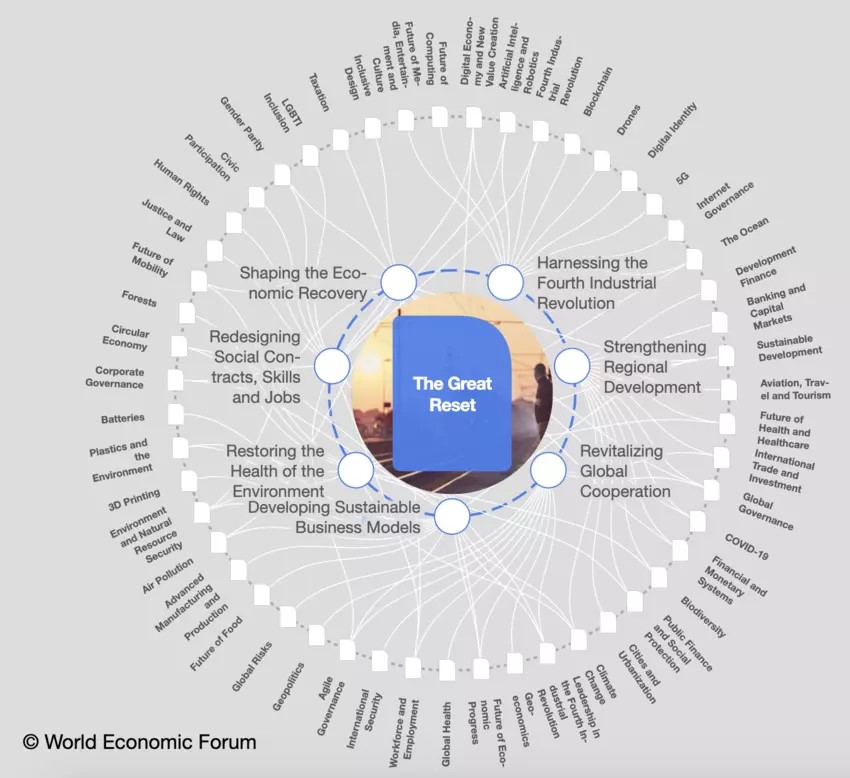
The 7 chapters of the change agenda in order to change the World for the Better in the WEF proposal :
1) Harnessing the fourth Industrial Revolution
2) Strengthening Regional Development
3) Revitalizing Global Cooperation
4) Developing Sustainable Business Models
5) Restoring the health of the environment
6) Redesigning Skills, contracts, Skills and jobs
7) Shaping the Economic recovery
Conclusion and Next steps :
Every year, the World Economic Forum holds the famous “Davos Forum”. Next year, it aims at doubling the experience : on the one side hold the “official” summit, with the participation of global leaders, and separately hold a parallel summit with the “Great Reset” at the center of the debates.
I do subscribe to the WEF attempt to sponsor a drastic change of paradigm at World level. I trust the WEF program is heading in the right direction and I look forward to participating to this effort to transform our economies and ways of living so that our children have a future.
Children… In my view, education is also the one part I would tie intimately to the change agenda so that we prepare well the new generations : know who you are, learn how to think, and then (also) learn the necessary skills to shape your future.
At present, the School systems have no priority to develop self awareness ; they rather concentrate on teaching concepts, formulas and exercises, to get people ready to find a job or enter a University. Tons of identical exercises. How useful is this ?
Education is a lot more than training skills. A US survey indicates that 42% of the people who will lose their jobs during this crisis will probably never find the same job again (risk of permanent loss). So acquiring skills is a life-long habit – if you want to stay on the Labour Market. Children need to learn something more than techniques.
Jack Ma made an inspiring speech in the 2018 Davos summit : he said basically that it was time for a change of teaching : Artificial intelligence and robots will be infinitely better than we are to compute calculations and execute repeatable tasks. But they can not create and developing our skills in this sense (e.g. developing our right brain hemispheres) is a must.
if our school systems continue to be repetitive and old fashioned, with little to add to the XIX th century didactic, we will miss the point of the 4th Industrial revolution. Specialists alert that the level of students would be declining : is this rather a sign that the current teaching programs are unfit for the new generation instead ?
I will follow up on these aspects related with education and self awareness in the next posts as they are crucial to build a new generation of kids digital AND sustainable native.
The World Economic Forum in Davos in 2021 will address the first checkpoint for the “Great Reset”.
My only integration is related with Education, which fails to be a prominent part of the plan.
School systems in many countries are inadequate to meet the challenges of the 4th Industrial Revolution
Jack Ma gave his views on the current education misses during the 2018 WEF Davos Forum here :
https://www.youtube.com/watch?v=rHt-5-RyrJk
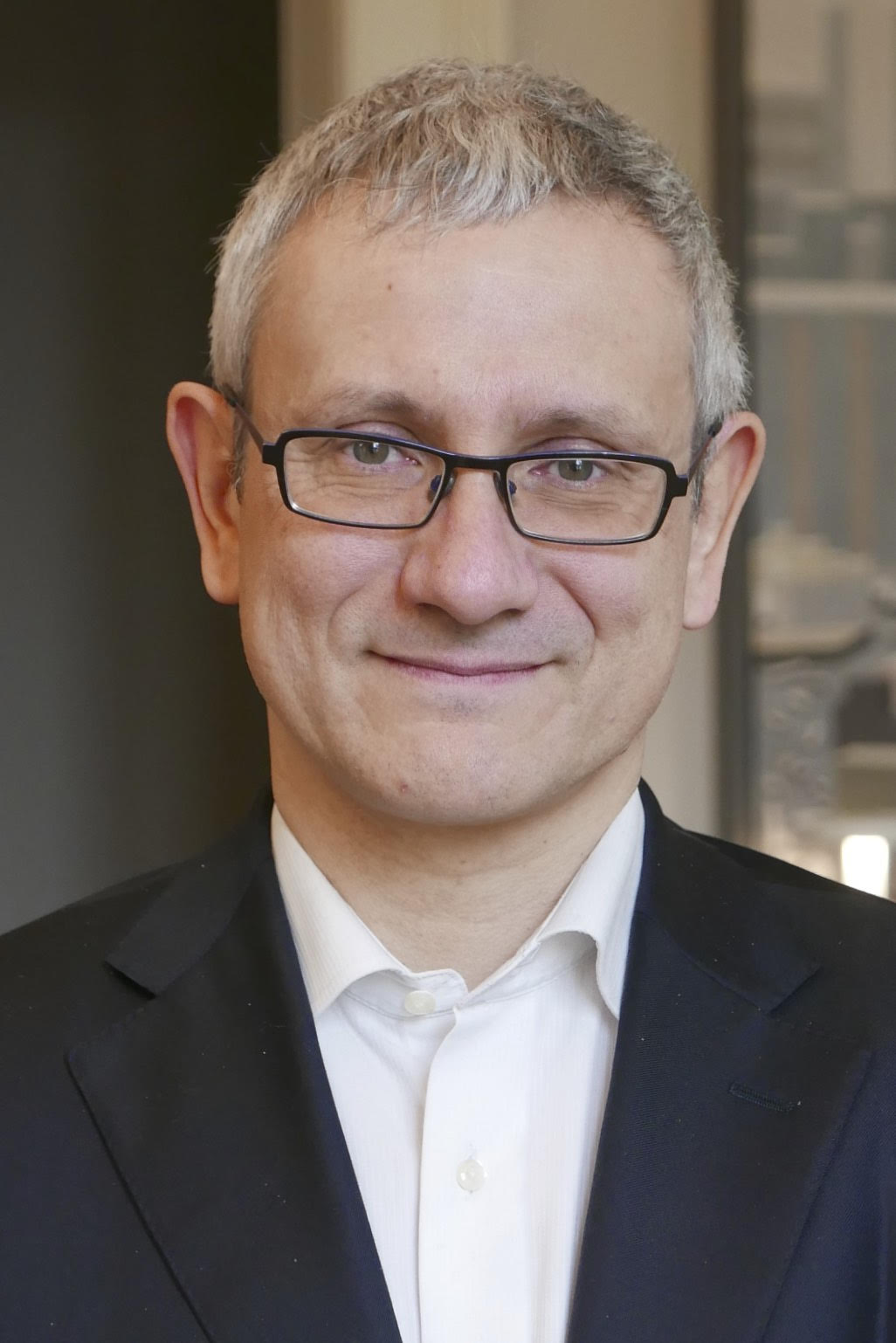
Alain Keck
Alain has 25 years of experience in the Insurance and banking Sector, where he held Senior Management positions in Europe for primary multinational Companies. Based in Milano and Paris, he is the founder of Virtusman Consulting, a management consulting firm focusing on business transformation through positive behaviors.
The present article represents the author’s personal views and does not represent a professional consultancy on the topics treated.
0 commenti