

Welcome to a new World 20.0
“The World has changed, so be it” vs.
“This was just a stop, now let us get back to normal”
As Europe is gradually reopening its economy, a lot is being discussed these days about the duration, effectiveness and the economic effects of the lockdown measures.
It is amusing to look at a sharp contrast : on the one hand politicians resuming long dated disputes putting the blame on others – rivale countries, lockdown experts, WHO, the leading party, … – and on the other hand activists and philosophers claiming that we are now in front of a drastic Society shift.
To stay as before or to transform, indeed, that is the question.
Is our Economy still driven by the same forces as before ?
Did we just open and close a parenthesis, or are we just opening up to a new Era ?
The macroeconomic effects of the lockdown were spectacular when the oil futures price went below zero seconds before settlement as nobody was wiling to take on any cargo. The oil future price alone symbolizes an old World made of fossile energy – unconstrained Law of Demand and offering – Virtuality / Derivatives.
Research Institutes are continuously updating their forecasts for 2020 and 2021 : the IMF published its April outlook on April 14th (resp. -3% World growth in 2020 ; +5,8% in 2021).
Then, on April 21st, BBVA Research published an Q2 Economic outlook for Spain, stating that in the context of a World recession in 2020 (-2,2%) led by the US and UE and a sharp recovery in 2021 (+4,8%).
All the above figures derive from proprietary predictive models which have been tuned to account for the one-off effects of a massive lockdown, and its presumable consequences. The modeling logics on offering, demand, price etc. are unchanged and the mainstream assumptions reflect the view that “this is just a halt, no more than this.” Financial markets are aligned with this position.
Senior Partners from the Boston Consulting Group, published in the May 2020 Harvard Business review, argue that there were no signs of structural regime breaks which should trigger the US Economy to fall in a great depression. They pinpoint emotional response and fears are the main risks for leaders, to be countered by intellectual discipline.
Most economists predict a World recession in 2020 with sharp recovery in 2021
Research material is available here :
IMF :
https://www.imf.org/en/Publications/WEO/Issues/2020/04/14/weo-april-2020
BBVA Research :
https://www.bbvaresearch.com/en/publicaciones/spain-economic-outlook-second-quarter-2020/
the mainstream macroeconomic projections reflect the view that, not withstanding the massive effects of COVID 19, the Economic logics are preserved and there are no signs of a Great Depression behind the corner.
Financial markets seem aligned with this position.
Harvard Business Review article :
https://hbr.org/2020/05/the-u-s-is-not-headed-toward-a-new-great-depression
But other economists pinpoint some risks were not accounted for correctly :
Nouriel Rubini, the famous professor of Economics at New York University, does not subscribe to this thesis. He released a series of articles starting from February in which he expressed a drastically different view.
He described what he called “the 10 deadly Ds”, and the perspective of the “Greater Depression of the 2020s” : Debt, Demographics, Deflation, Debasement, Digital Disruption, De-globalization, Democracy Backlash, Duopolistic Strategic Rivalry, Digital/Tech Warfare, Deadly Disasters (Pandemics, GCC). The main take is that the actions related with COVID are or will prove unsustainable over time from an economic point of view.
It is fair to say that markets do not put a high price on these risks, and focus on a simpler question : when shall we make business as before ? Else, is another massive lockdown going to happen ?
At present, companies strive to continue their “business as usual”, and achieve at least part of their Business plans. But public decisions (lockdown, quarantines, travel restrictions) create unpredictable situations, so all companies tend to put on hold their “growth” plans and focus on survival, e.g. “Value” strategies.
From March 26th to April 6th, the Economist ran a Global Business Barometer to track the sentiment of 2758 executives from 118 countries during the COVID crisis. On a scale from -50 to +50, respondents answered -39,2 for the Economic outlook, -31 for consumer confidence and -18 for their own company, showing an evident relative optimism that their corporation is better prepared to face the turmoil.
40% of executives think we will be out of the crisis in 1 year, 46% between one and two years, and 10% that it will take 3 to 5 years.
It will be all the more interesting to look after the evolutions over the next surveys.
Nouriel Roubini publications
February 2020 :
https://nourielroubini.com/the-white-swans-of-2020/
April 2020 :
https://www.project-syndicate.org/commentary/greater-depression-covid19-headwinds-by-nouriel-roubini-2020-04/
Mr. Roubini indicates 10 major risks which our Global World is facing, which could lead to a 10 years recession.
But these risks are not perceived as an immediate threats by financial markets which concentrate on business continuity.
The Economist survey :
https://globalbusinessbarometer.economist.com/executive-summary/
Main Executives sentiment is that of a crisis which will end within the next 18 months
Do we have early signs of behavioral discontinuity ?
Risks are a continuous part of our lives. What makes a big difference is our perception, as individuals or managers, that they are real immediate threats. When my life is suddenly in danger in front of an unknown phenomenon, then my first impulse is to stop out of fear (limbic system) ; then, my neocortex will start imagining adaptive solutions. This approach applies to organizations and countries too ; now, the lockdown has given all of us (countries, organizations and individuals) that extent of time needed to understand the threat, figure out a response and act.
Psychologists are currently incapable to say what impact on our brain and emotions the lockdown is going to have in the medium to long term ; what is certain is that 2 months in lock-down is sufficient time to create new brain associations (synapses), and that over 2 billion humans of all age, from babies to the very late age, were involved.
Macroeconomic models account for aggregate Individual choices and they like predictable behaviors ; but when there is a collective change of consciousness, the existing macroeconomic models need to be reviewed significantly.
Did you ever hear about futurists ? It is a new field for analysts who try to incorporate technology and society changes into their modelling. I pretty much like The Future Today Institute which provides very interesting conceptual material to help account with the pace of change. I have found a very valuable contribution from Amy Webb, a Professor at NYUStern, dated March 11th. It describes the Futurist method to cope with uncertainties. And it pinpoints that today is not the right time to predict, but to get prepared to deal with (even more) uncertainties. If you have not done so, it is still time 2 months later.
Microeconomics, psychology and sociology search the relations between a stimulus (emotions, thoughts and brain associations) and individual behaviors. Let us try a small scale approach :
To get a sense of what is happening now, arrange a family meeting and debate :
what is important right now for your family ? what about work, studies, vacation, Financial planning ? How do we keep our family safe and protect our elders ? What are you kids doing differently ? etc.
Note and compare with those things people would have NEVER said 6 months ago, and you will get a sense of the new drivers of retail behavior.
Evidently, perception has changed on many things, but it is early to forecast a major shift in society. For sure, there is yet another technological acceleration happening.
Changes in Behavior usually occur when there is an highly emotional situation where our lives are at risk and we have time to think and react – this is precisely what COVID 19 has provided to us.
There is no research material yet available from psychologists on the effects of the COVID pandemics.
The Future Today Institute :
https://futuretodayinstitute.com/
Amy Webb article on uncertainties :
https://medium.com/swlh/how-futurists-cope-with-uncertainty-a4fbdff4b8c6
So let us list the major uncertainties in order to be prepared for the next phase – whatever it is.
Why not start with mapping our household’s worries and plans ?
Well, family areas of concern seem to have changed and our plans too. And a new era of technological interaction has just started.
For the rest … it is early to call.
interim Conclusion
What comes next ?
This is the first chapter of a series of articles and briefs on what I called World 20.0 .
Like we have internet 2.0, we are now entering World 20.0. It is certainly a new chapter of our history, because so much unexpected occurred in so little time, but how different are we after that ?
On the Monetary side, many dogmas have blown up into the air : the IMF opening up to the write off of international debt has no precedent, the UE close to an agreement to issue eurobonds centrally, the ECB working hand in hand with PIIGS to support all economies. A lot of interesting things already.
On the Scientific side, there has never been such a positive effort and coordination worldwide to mitigate the effects of a pandemics. And the results are tangible : the virus genoma was discovered within weeks and information about valid treatments circulated (quite) well internationally.
I am not that kind with politicians : internationally, the tendency was a NIMBY national approach, with rare positive exceptions of leaders who tried to facilitate a UE wide response in order to better resist the virus. In vain, nationalism prevailed.
Besides Europe sadly “omitted” to consult their southeastern allies (Taiwan and South Corea) who had experienced SARS before. The UE continues to perform poorly on the “3 T” side (Testing, Tracing, Treating), which would be the best sanitary response to this virus. This interview of Christian Dorsen, the German expert on SARS and COVID 19, is rather illuminating : https://www.theguardian.com/world/2020/apr/26/virologist-christian-drosten-germany-coronavirus-expert-interview)
Now what about people ? We all experience a serious enhancement of our digital skills, as kids up to their grand parents are connected to the internet on at the same time,- classes, videocalls, webinars… and an acceleration.
So, COVID is influencing profoundly our lives, and maybe also our scales of reference. If we shall just make small adjustments in our lives, we will enter a “COVID WORLD”, governed by additional rules and constraints. At the same time, we have the opportunity to transform the World and create a new alliance, a more collaborative model ; it will not come initially from politics, but from all the people. This is a possible “POSITIVE WORLD”.
Along with fellow experts and philosophers, We will continue to develop these concepts over the following weeks.
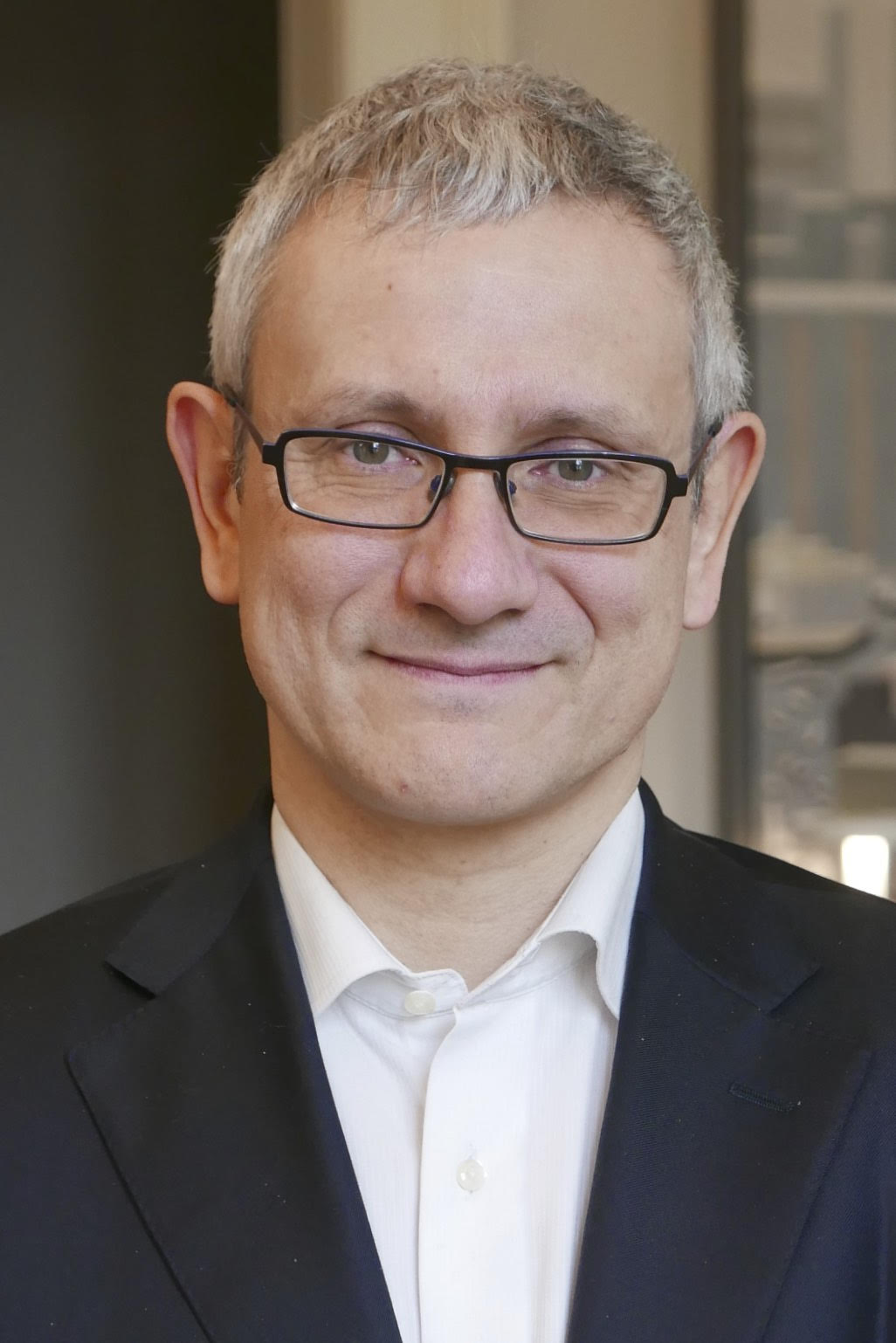
Alain Keck
Alain has 25 years of experience in the Insurance and banking Sector, where he held Senior Management positions in Europe for primary multinational Companies. Based in Milano and Paris, he is the founder of Virtusman Consulting, a management consulting firm focusing on business transformation through positive behaviors.
The present article represents the author’s personal views and does not represent a professional consultancy on the topics treated.
0 commenti